

Towards Human-Level Robot Intelligence and Beyond
When Chen and I founded Reward AI, we wanted to help bring robots into everyday use. That goal runs through our whole team. We focus on two challenges central to deploying robots at scale: intelligence and performance. A robot earns its place in a factory, a kitchen, or a warehouse through what it does every day, in any body, at full speed, alongside others. Those three phrases are, in order, the three problems we exist to solve.
1.One Model, One Data Interface, Any Body
The human brain is the existence proof for fluid embodiment. Hand someone a game controller and within minutes they are fluent in a body that isn't theirs: steering a three-armed avatar, scuttling as a giant lobster, banking through the air on wings. Amputees learn to feel through prosthetic limbs. The brain treats a body as an interface, not an identity.
Many robot policies today are designed for a single embodiment, or a single family of embodiments like robot arms. Changing the hardware can require retraining the model and collecting new data. As hardware improves, making models and data reusable across bodies becomes increasingly valuable.
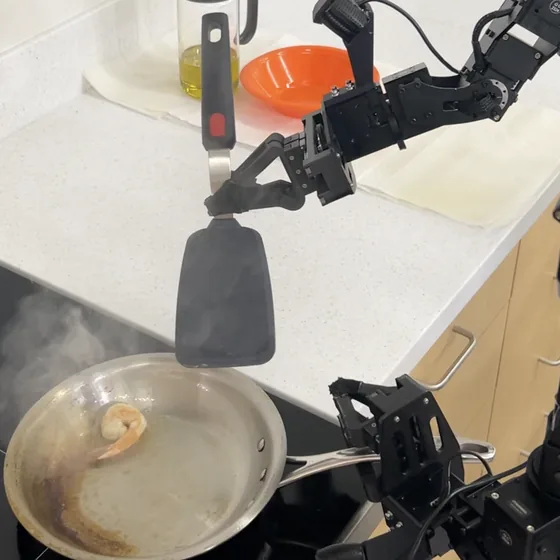
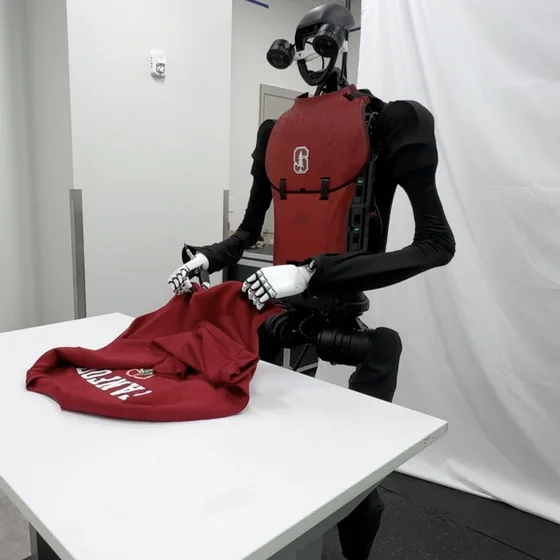
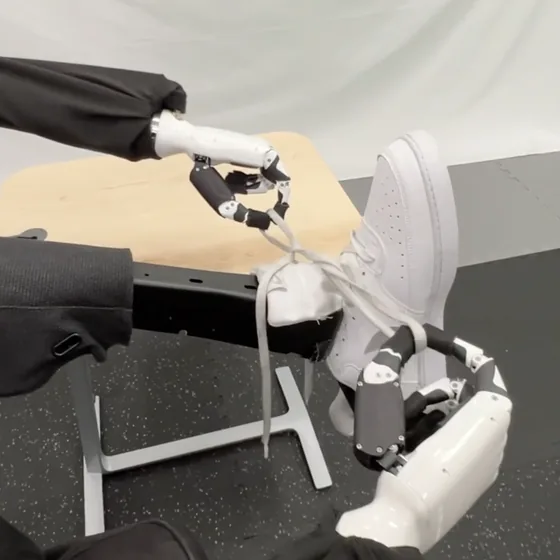
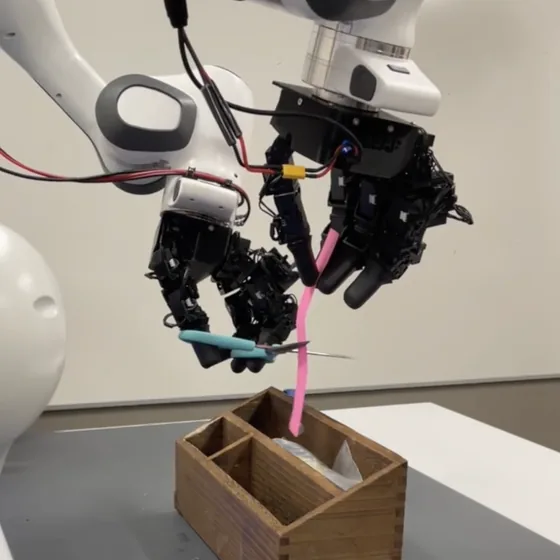
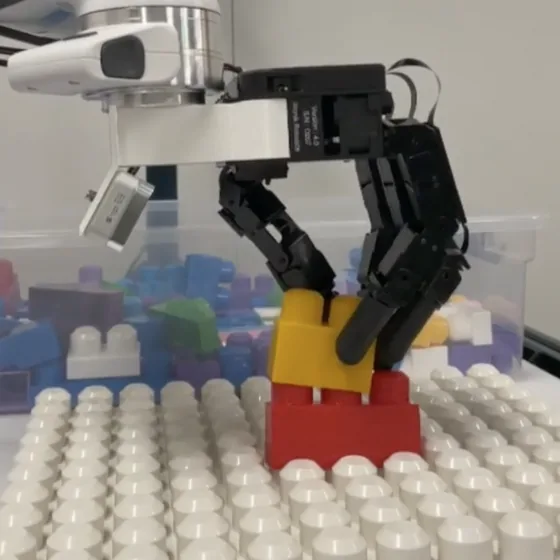
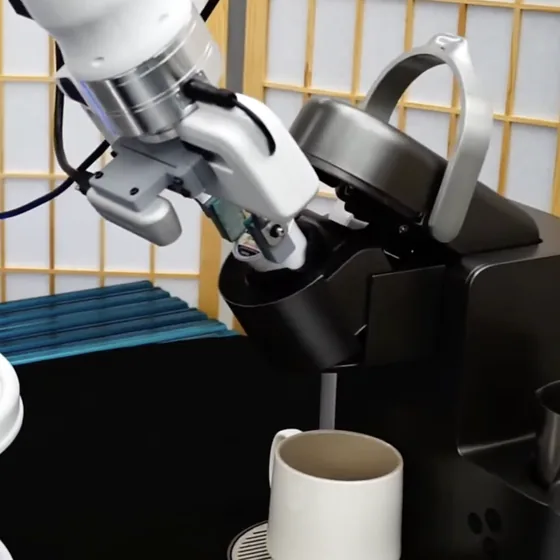
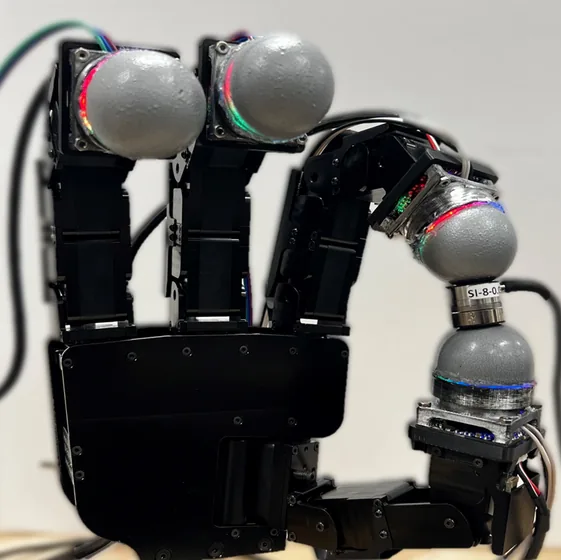
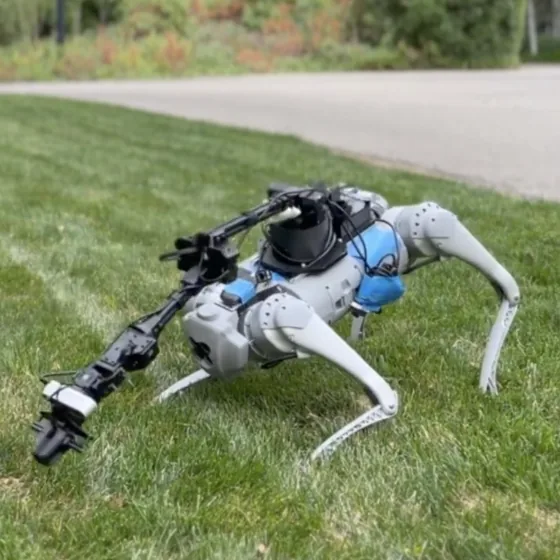
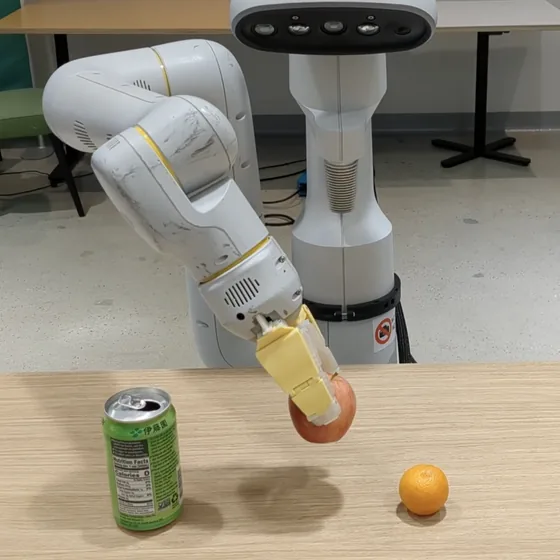
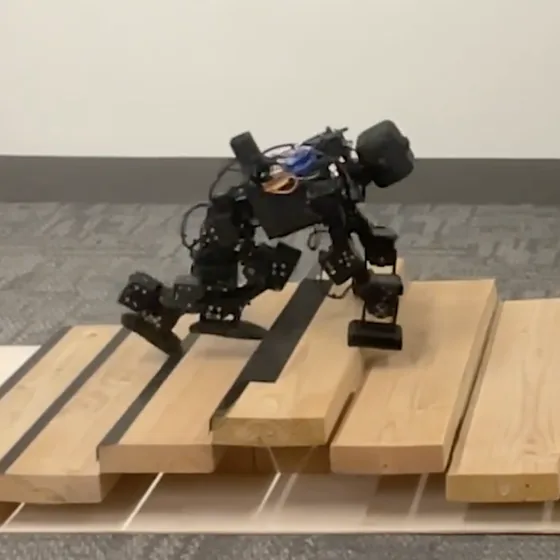
We took the interface lesson literally: all of our general manipulation data flows through one common interface, the same for every robot, into one model. That model spans robot arms, legged humanoids, and wheeled mobile manipulators; handles not only tabletop manipulation but whole-body work (bracing, leaning, stepping into a task); and can be dropped onto whatever robots already stand on a customer's floor.
One interface means no handoffs downstream, either. The model's life is not carved into pre-training and fine-tuning, and there is no round of on-robot data collection standing between it and a deployment. Every demonstration we gather powers every robot directly, with no embodiment gap for it to fall into. The payoff is data that appreciates instead of depreciates: demonstrations we collect today will still be training robot bodies that haven't been designed yet.
A brain that can inhabit any body is the foundation. The next question is how fast that body moves.
2.Human Efficiency, Then Beyond
Watch a line cook plate six orders at once, or a warehouse packer close a box without looking at it: fluid, overlapping, anticipatory motion. Robot policies learned from demonstrations often move more slowly, pausing between actions. Closing that gap in real time is a central challenge for us.
That gap is what separates a convincing demo from a worthy intelligent machine. On an assembly or packaging line, cycle time is the whole job. In a kitchen, an assistant needs to keep pace to be useful. Speed is not polish on top of capability; it is part of what makes a robot genuinely useful.
So we treat speed as a first-class research problem rather than a post-hoc optimization: perception, prediction, and high-frequency control designed together, so that fluency is native to the system instead of retrofitted onto it. And human efficiency is the milestone, not the ceiling. Motors do not fatigue, and control loops run faster than reflexes. We aim to build on those advantages.
Every clip we publish runs at 1x speed, clearly labeled. The speed you see is the speed our model delivers.
One robot that moves like a person is valuable. Several that work like a crew are a different category of machine.
3.Many Robots, One Shared Goal
Much of the most valuable physical work is bigger than any single body: carrying furniture, assembling large structures, running a kitchen at rush hour. Humans solve this with teams, and teams run on mutual understanding. We are building that understanding into robots, beginning with quadmanual manipulation, where four robots coordinate and collaborate, and extending to mixed teams that read each other's intent, hand off objects, divide roles, and recover together when something slips, all without scripted choreography.
Because our robots share one brain, collaboration is not a communication protocol bolted on afterward; it is closer to two hands of the same body. And this is where robots go where humans cannot. People can't share minds. Robots can. What one learns, every robot knows.
Building Across the Full Stack
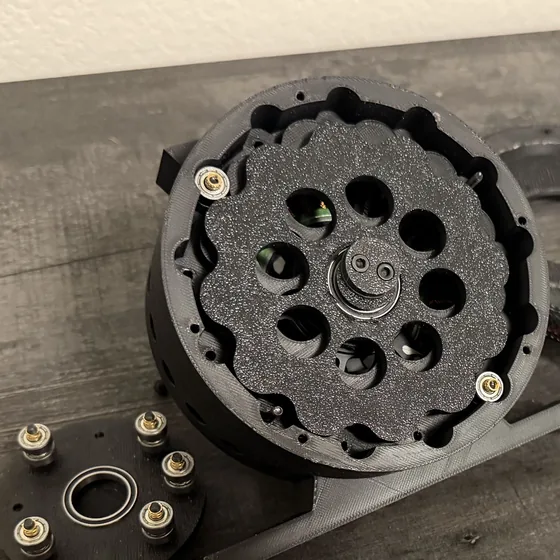
None of these problems fit inside a single discipline, and we have spent years solving them together rather than separately. We are engineers, builders and researchers who pioneered robot learning in dexterous manipulation, mobile manipulation, and legged locomotion, spanning the full stack: from large foundation models to gearboxes, from hands to legs, from visual and tactile perception to high-frequency control. Reward AI is where we come together.
— Zipeng